High Food Prices of Cocoa enabling farmers to support their families


I was forwarded the article below from Martin Wolf, reporter for the Financial Times. He raises some interesting points on the causes of high food prices and strategies to address this problem, including humanitarian; trade and other policy interventions; and longer-term productivity and production. As he indicates, increased spending on research will be essential in the long term to tackle issues of food insecurity.

In the article, Wolf mentions the 37 countries in “substantial need” of food assistance, according the FAO. Several of these are cocoa producing countries such as Ghana, Cote I’Ivoire, Ecuador, Vietnam. In these countries, cash crops such as cocoa play an important role of providing income to millions of small scale family farmers. New technologies for both food and cash crops can enhance farm-level productivity, enabling farmers to earn more, support their families’ educational and health needs, and invest in the future.

Every year, more than 5 million family farms in countries like Cote d'Ivoire (Ivory Coast), Cameroon, Vietnam and Brazil produce about 3 million tons of cocoa beans.

In addition to its use as food, cocoa is also made into soaps, and cosmetics.

  • Number of cocoa farmers, worldwide: 5-6 million
  • Number of people who depend upon cocoa for their livelihood, worldwide: 40-50 million
  • Annual cocoa production, worldwide: 3 million tons
  • Annual increase in demand for cocoa: 3 percent per year, for the past 100 years
  • Current global market value of annual cocoa crop: $5.1 billion
  • Cocoa growing regions: Africa, Asia, Central America, South America (all within 20 degrees of the equator)
  • Percentage of cocoa that comes from West Africa: 70 percent
  • Length of time required for a cocoa tree to produce its first beans (pods): five years
  • Duration of “peak growing period” for the average cocoa tree: 10 years

Ecological Footprint

Ecological Footprint is the impact of each of us makes on the planet. It works out how much land and sea is needed to feed us and provide all the energy, water and materials we use in our everyday lives. It also calculates the emission generated from oil, coal and gas we burn at ever-increasing rates, and it estimates how much land is needed to absorb all the waste we create (and there's plenty of it!)
If we cover the food, materials and energy we consume into areas of land and sea required to produce them, we would discover that for every tonne of paper we use each year, we need an area of forest about the size of five football pitches to produce it. And for each tonne of fish we eat, we need a sea area covering as much as 60 football pitches.

Every two years, WWF publishes a Living Planet report, which monitors the Earth’s natural resources and how we use them. The latest report shows that we’re consuming about 20% more each year than the planet can sustain into the long term. We’re eating into the Earth’s natural reserves by destroying our forests of our soil that’s been built up over centuries. Mankind’s global footprint is two and a half times larger than it was in 1961. As you might expect, there are large differences between the footprints of people in different countries: the average North American’s, for example, is double that of someone in the UK and seven times that of the average African or Asia. Impoverished countries such as Afghanistan and Eritrea make the smallest footprints. This misuse of the Earth’s natural resources can’t go on. The fact is, if everyone on Earth consumed as much as the average person here in the UK, we would need three planet to support us – and if we consumed as much as the average American, we’d need six planets.


What are the measures and attitudes to prevent global warming in your country?


My Brainstorm of this week: low-carbon consumption.

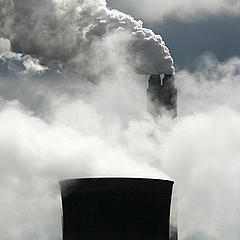
Climate change is probably the most significant challenge of the 21 Century. Caused by unsustainable patterns of production and consumption, it is the result of accumulation of greenhouse gases in the atmosphere for the last 150 years, mainly from the burning of fossil fuels.

The environmental impacts of climate change – which we are already suffering – affect us all, but especially the poorest and most vulnerable. For developing countries, which have contributed very little to the problem, climate change will take a heavy toll on their efforts in pursuit of sustainable development.

The convention’s Kyoto Protocol set quantified emission limitation or reduction obligations for industrialized countries, based on the principle of countries’ common but differentiated responsibilities in relation to the problem’s cause.

The Convention itself recognizes that the share of global emissions originating in developing countries will grow to meet their social and economic needs. In many of these countries, emissions may grow as a result of policies devoted to fighting poverty, such as, for instance, expanding electricity to rural or remote areas. On the other hand, the situation in developed countries that have already provided for the basic needs of their populations is different: in many of them, a major source of emissions is due to superfluous and unsustainable consumption.

It must be stressed, however, that the Kyoto does not give for all emergent countries a license to pollute. Since climate change is a global problem, efforts to combat it should also be global. What changes in different countries is the nature of the obligations. The common objective, however, is a future in which development is based on low-carbon consumption.


Future Foods: Join the GM Debate


There are many issues surrounding the GM pro/con debate, this should give you a peek into what GM food is and why so many people seem to either be staunch advocates or violent opponents of it.
One issue that is hotly debated among scientists and the general public alike is genetically modified (GM) food. For those who are unsure what this is, GM food is considered to be any food product that has had its DNA modified in a lab. This may mean that genes were added by scientists, as in tomatoes which can withstand pesticide treatments that would typically kill them (a.k.a. round-up ready crops). Cotton is another crop that has been modified. It can now produce Bt toxin which kills certain bacterial pathogens. You may have heard of this specifically since there has been concern that the toxin is also killing butterflies that feed on the corn pollen. Modifications to a plant's DNA does not have to be so controversial or public, however. As of 2006, 89% of soybeans, 83% of cotton and 61% of corn in the U.S. was genetically modified in some way. Rice, tomatoes, squash and papaya have also been modified, although few people seem to realize it. Currently, only 18% of our land mass is cultivated for agriculture. To make matters worse, urban sprawl and development claim 70,000 km2 per year of previously dedicated farmland. Add to this, the global population is expected to reach 9 billion by 2040 and a serious problem arises. How do we propose to continue feeding ourselves in the future when our population is rising and our farmland is shrinking?

GM foods are resistant to more diseases, grow in less space, provide greater yield and need fewer pesticide applications. There are other benefits as well since they can be engineered to carry medicines. For example, bananas can now carry a vaccine for Hepatitis D. Simply doing something as simple as eating these bananas can save adults and children from becoming infected by a disease that is both horrible and incurable. Syngenta, a GM company, is now producing rice which contains 23 times more vitamin A than conventional rice. Since vitamin A deficiencies cause 500,000 deaths per year, the medicinal quality to such rice is significant. Foods such as these may be genetically modified, but they are positioned to affect the world’s population in positive and potentially life-saving ways.

Future Foods: Join the GM Debate

Watch video

Future Foods

This event is held at the Science Museum until the 31st of May 2009. The display explains the science behind genetically modified crops and explores the alternatives.
Location: Exhibition Road, London,
Contact: http://www.sciencemuseum.org.uk/
Organisers: Science Museum
Website: http://www.sciencemuseum.org.uk/


My favourite video: Discover Rio de Janeiro

YouTube

jumaddalena has shared a video with you on YouTube:

Discover Rio de Janeiro- Brazil.Narrated in English.
"Sea,Lagoon, Forest...
And all of that in the middle of a city"
Discover Rio de Janeiro - Brazil

Bye Bye pre-sessional english course..


Bye Bye group, bye bye Jim!
I wish all the best for this group. We have studied hard until the end of this course.
I had a good experience and improve my english a lot..
I really like to keep in touch with everyone,
Please, send emails, photos, and call me any time!
Thanks Jim for help us,
See you guys.. Bye Bye