Varias Receitas


As couves de Bruxelas esse ano estao lindas, verdinhas e enormes...nao tinha receita nenhuma.. peitei e inventei ja que ia rolar um
Lavoisier e sua maravilhosa lei - " nada se perde, nada se cria, tudo se transforma" - um arroz de ontem, um resto de vagem de ontem, uma
cenourinha ralada, uma cebola, uns ovos e tcharannnn.... fried rice !!!

Entao... cozinhei as couvezinhas no vapor por 10 minutinhos pra ficarem bem crocantes. Na frigideira,azeite, alho e cebola e como nao
tinha amendoas ou nozes foi macadamia mesmo mas acho que fica melhor com amendoas... adicionei sal, uns temperinhos tipo cominho


A idéia é ter uma beringela assada em formato de "leque" e para isso basta você usar uma beringela pequena e cortá-la ao meio (no sentido do comprimento). Em cada metade você vai fazendo fatias, mas sem cortá-las até o final, mantendo-as juntas, como um leque mesmo. No meio de cada fatia é só colocar uma rodela de tomate e ir montando os leques, que irão para o forno em uma assadeira forrada com fatias de cebola. Antes porém, a receita manda acrescentar caldo de legumes dissolvido em 1/2 xícara de água, azeitonas picadas, orégano e azeite. Eu fiz bem parecido, mas substituí as azeitonas por alcaparras e acrescentei ainda alguns dentes de alho inteiros. Caprichei no orégano e no azeite e coloquei, por minha conta, pimenta calabresa. Cobri com mais cebola em fatias, coloquei o papel alumínio e levei ao forno pré-aquecido por quase 1 hora. Depois, foi só remover o alumínio, regar com mais azeite e deixar secar um pouco.


Esse negócio é tão bom, mas tão bom, que eu já tenho um objetivo urgente: repetir a receita usando também mussarella de búfala e manjericão entre as fatias.

Deus é mais! Tem alguém no mundo que goste mais de beringela do que eu? =)

http://www.terradourada.org/pag_arte.php?id=122
Fotos de Pratos!

Canelone de abobrinha com ricota de castanha

Receita de Flávio Passos
Adaptada por Lisiane Miura, nutricionista de Claudia Comida&Bebida
INGREDIENTES
3 abobrinhas italianas médias (escolha as mais retas)
PARA O RECHEIO
Sobra do leite de castanha (veja receita abaixo)
Azeite orgânico, sal e suco de limão a gosto
Ervas frescas picadas de sua preferência
MODO DE PREPARO
Com um fatiador de legumes do tipo mandoline, fatie as abobrinhas pelo comprimento, na espessura mais fina possível. Reserve.
PREPARE O RECHEIO
Em uma tigela, tempere a castanha com azeite, sal, suco de limão e as ervas de sua preferência. Sobre um pedaço de filme plástico untado com azeite, disponha de três a quatro fatias de abobrinha, lado a lado, sobrepondo-as ligeiramente, formando um retângulo de abobrinha. Disponha um pouco do recheio sobre uma das bordas menores da abobrinha e, com a ajuda do filme plástico, enrole como um canelone, desgrudando o filme plástico da abobrinha. Repita a operação com o restante dos ingredientes. Disponha os canelones em pratos e sirva-os com o molho de sua preferência.
Varie o recheio, adicionando azeitonas orgânicas picadas ou tomate seco picado à ricota de castanha.

Leite de castanha-do-pará

INGREDIENTES
2 xícaras de castanha-do-pará sem casca
Água o suficiente para cobrir
3 xícaras de água mineral
MODO DE PREPARO
Em uma tigela, ponha a castanha e cubra com a água, até atingir 2 cm acima do nível das castanhas. Deixe descansar em local fresco por 14 horas. Escorra, despreze a água e lave bem as castanhas sob água corrente. Escorra novamente. Bata no liquidificador com a água mineral até ficar homogêneo. Coe e esprema ligeiramente o bagaço. Esta parte sólida poderá ser usada no preparo de pastas e de queijos, como na receita do canelone.


Caneloni de Ricota de Castanhas com Molho de Tomate Seco ao Sol
Caneloni de Ricota de Castanhas e Molho de Tomates Secos ao Sol
Papaya com Cacau, Goji e Coco

Papaya com Cacau em Pedaços, Goji  e Coco em Flocos
 Torta de Maracujá e Damascos
Torta de Maracujá e Damascos

Antepasto de beringela com maçã


Picar os ingredientes - esse é todo o trabalho que você terá pra fazer esse antepasto maravilhoso.

Eu usei:


1 - 2 cebolas picadas
2 - 2 pimentões verdes picados em cubos (pode misturar com vermelho, amarelo ou usar um só, como preferir)
3 - pimenta biquinho picada
4 - muito orégano
5 - maçã descascada, cortada em cubos (grandes, senão ela desaparece completamente) passada pelo suco de limão
6 - uva passa sem semente
7 - 2 beringelas cortadas em cubos deixadas de molho em água e sal por 1 hora, depois lavadas e bem escorridas
8 - folhas de louro, azeite extra virgem, sal, pimenta calabresa (para temperar)
9 - alho
10 - azeitonas pretas picadas
11 - salsinha (no final)


Bote tudo numa assadeira, mexa, tempere a seu gosto, cubra com papel alumínio e leve ao forno até a beringela estar macia. Retire o alumínio e deixe até começar a dourar, mexendo de vez em quando para assar por igual.
Espere esfriar, cubra com mais azeite do bom, sirva com pão italiano e vinho e coma até cansar.

Vegan cupcakes

I would love to do those cupcakes..


Adorable, right?


Can you believe it? And let me tell you, they were delicious. Mylie loves to share all-things-glorious with others, so she sent me her vegan cupcake recipe to share with all of you.

Vanilla Cupcakes!

2 1/8 cups flour
2 tsp. baking powder
1/2 tsp. baking soda
1/2 tsp. salt
1 1/8 cups sugar
1 cup vanilla soymilk
1/2 cup vanilla soy coffee creamer
1 Tbsp apple cider vinegar
1/2 cup vegetable oil
1 Tbsp vanilla extract

Preheat the oven to 350°.

In a large bowl, mix all the dry ingredients until evenly combined. Then add all the wet ingredients and stir until smooth. Line a muffin pan with cupcake cups and fill each cup about halfway with batter. Bake for about 15 to 20 minutes (to tell if they are ready you can stick a small knife or chopstick into the middle of the cupcake to see if it comes out clean. If there is still batter sticking to it, it's not ready).

Once finished, remove from oven and take out pan. Place the cupcakes on a wire rack or heat proof surface to cool. Let the cupcakes cool completely before frosting them or the frosting will melt!

This will make about 20 cupcakes.

For the frosting, use a vegan already made frosting like Pillsbury Creamy Supreme Vanilla mixed with food dyes to get the color you want. And for adding details, use a vegan decorating icing, like Betty Crocker.


Now go get creative and make some unbelievable vegan cupcakes for your friends, too!

Special Dessert from RawChef.com


CLEMENTINE TARTS


Coconut Tartlet


2 c dried coconut

½ c cashews

3 T agave

T fresh lemon zest

¼ t Celtic salt

1 recipe Clementine Sorbet

Fresh citrus zest as garnish

¼ cup lavender syrup

Fresh lavender flowers for garnish

In food process or, process the coconut, agave, lemon zest, and salt until mixture forms a ball and is fully blended. Line small tartlet shells with plastic wrap. Press 1-2 T coconut crust mixture into each, press firmly around the sides and flutes if using fluted molds. Store in freezer until ready for use. For Service: Please 3 tart shells on each plate, using a 1 ounce scoop, scoop Clementine sorbet on each. Garnish with fresh long strands of citrus zest. Finish the plate with lavender syrup and sprinkled fresh lavender flowers and/or Clementine segments.

Clementine Sorbet


2 cups coconut meat of 1 ½ cups soaked cashews

1 cup Clementine juice

2 whole Clementine’s peeled

¼ c agave syrup

Pinch of sea salt

½ t fresh nutmeg shavings

In high speed blender, blend all ingredients until smooth. Either pour in your choice of sorbet maker, (*Paco Jet being my personal favorite), following manufacturers instruction, or line a square container with plastic wrap, pour in blended mixture. Freeze, pop frozen block out the following day, slice in strips and put through a gear juicer, with the solid plate for a delicious sorbet!

Lavender Syrup


¼ c dried lavender flowers

1 c agave

In high speed blender, blend for 1 minute, continue to pour through fine strainer to remove remaining bits.

New Recipes!
Every month I will post a health recipe from my Healthy Pantry department at Whole Food Market.

Recipe:

Learn to Cook: Roasted Butternut Squash


Serves 4

Hard winter squashes can be intimidating, but they are actually very simple to prepare as well as satisfying, nutritious and affordable! Butternut squash, for example, delivers healthy carbohydrates, vitamins A and C plus potassium. This basic recipe brings out the best in winter squash: little bites delightfully caramelized outside and creamy inside. Serve straight from the oven as a side dish or use in soup, tacos, enchiladas, pasta and salad.

Ingredients

1 medium butternut squash (about 2 pounds)
1 tablespoon extra virgin olive oil
Salt and ground black pepper to taste

Method

Preheat oven to 400°F. Halve the squash lengthwise. Using a spoon, scoop out and discard seeds.

If desired, peel with a vegetable peeler or cut into big chunks and keep steady on the cutting board while cutting off the peel with a knife.

Cut into 1-inch cubes. Transfer to a large, rimmed baking sheet. Toss with oil, salt and pepper and spread out in a single layer. Roast, tossing occasionally, until just tender and golden brown, about 30 minutes.

Nutrition

Per serving (about 8oz/231g-wt.): 150 calories (30 from fat), 3.5g total fat, 0g saturated fat, 0mg cholesterol, 300mg sodium, 27g total carbohydrate (3g dietary fiber, 5g sugar), 3g protein

The tree of life that bears fruit twelve times. Each month she gives her fruit, and her greenery serves for the cures of the nations.

Managing the Health effects of Climate Change


EVENT: Managing the Health Effects of Climate Change: What Next?
Monday 8 June 2009 08:00 to 12:30
Location: Chatham House, London

http://www.chathamhouse.org.uk/events/view/-/id/1186/

Climate change could be the biggest global health threat of the 21st century.

Effects on health of climate change will be felt by most populations in the next decades and put the lives and wellbeing of billions of people at increased risk. During this century, the earth’s average surface temperature rises are likely to exceed the safe threshold of 2°C above pre-industrial average temperature.

This report outlines the major threats—both direct and indirect—to global health from climate change through changing patterns of disease, water and food insecurity, vulnerable shelter and human settlements, extreme climatic events, and population migration. Although vector-borne diseases will expand their reach and death tolls, the indirect effects of climate change on water, food security, and extreme climatic events are likely to have the biggest effect on global health.

A new advocacy and public health movement is needed urgently to bring together governments, international agencies, non-governmental organisations, communities, and academics from all disciplines to adapt to the effects of climate change on health.

I will if you will

How are your food choices affecting climate change?

What does your morning cup of coffee have to do with tropical songbirds?

Believe it or not, the food choices we make everyday have a significant impact on our environment.

I protect this planet that I live, and you (reader), do you want to change ? or still wait the goverment makes a significant contribution.. think about.. most people move when see others in moviment..

The final report from the Consumption Roundtable.
Consumers are ready and willing to act on climate change and the environment, but they need to be supported by Government, Business and each other.

Download:
I_Will_If_You_Will.pdf - 1383 KB
Summary:
The final report of the Sustainable Consumption Roundtable sets out how a significant shift towards more sustainable lifestyles is possible and positive.

High Food Prices of Cocoa enabling farmers to support their families


I was forwarded the article below from Martin Wolf, reporter for the Financial Times. He raises some interesting points on the causes of high food prices and strategies to address this problem, including humanitarian; trade and other policy interventions; and longer-term productivity and production. As he indicates, increased spending on research will be essential in the long term to tackle issues of food insecurity.

In the article, Wolf mentions the 37 countries in “substantial need” of food assistance, according the FAO. Several of these are cocoa producing countries such as Ghana, Cote I’Ivoire, Ecuador, Vietnam. In these countries, cash crops such as cocoa play an important role of providing income to millions of small scale family farmers. New technologies for both food and cash crops can enhance farm-level productivity, enabling farmers to earn more, support their families’ educational and health needs, and invest in the future.

Every year, more than 5 million family farms in countries like Cote d'Ivoire (Ivory Coast), Cameroon, Vietnam and Brazil produce about 3 million tons of cocoa beans.

In addition to its use as food, cocoa is also made into soaps, and cosmetics.

  • Number of cocoa farmers, worldwide: 5-6 million
  • Number of people who depend upon cocoa for their livelihood, worldwide: 40-50 million
  • Annual cocoa production, worldwide: 3 million tons
  • Annual increase in demand for cocoa: 3 percent per year, for the past 100 years
  • Current global market value of annual cocoa crop: $5.1 billion
  • Cocoa growing regions: Africa, Asia, Central America, South America (all within 20 degrees of the equator)
  • Percentage of cocoa that comes from West Africa: 70 percent
  • Length of time required for a cocoa tree to produce its first beans (pods): five years
  • Duration of “peak growing period” for the average cocoa tree: 10 years

Ecological Footprint

Ecological Footprint is the impact of each of us makes on the planet. It works out how much land and sea is needed to feed us and provide all the energy, water and materials we use in our everyday lives. It also calculates the emission generated from oil, coal and gas we burn at ever-increasing rates, and it estimates how much land is needed to absorb all the waste we create (and there's plenty of it!)
If we cover the food, materials and energy we consume into areas of land and sea required to produce them, we would discover that for every tonne of paper we use each year, we need an area of forest about the size of five football pitches to produce it. And for each tonne of fish we eat, we need a sea area covering as much as 60 football pitches.

Every two years, WWF publishes a Living Planet report, which monitors the Earth’s natural resources and how we use them. The latest report shows that we’re consuming about 20% more each year than the planet can sustain into the long term. We’re eating into the Earth’s natural reserves by destroying our forests of our soil that’s been built up over centuries. Mankind’s global footprint is two and a half times larger than it was in 1961. As you might expect, there are large differences between the footprints of people in different countries: the average North American’s, for example, is double that of someone in the UK and seven times that of the average African or Asia. Impoverished countries such as Afghanistan and Eritrea make the smallest footprints. This misuse of the Earth’s natural resources can’t go on. The fact is, if everyone on Earth consumed as much as the average person here in the UK, we would need three planet to support us – and if we consumed as much as the average American, we’d need six planets.


What are the measures and attitudes to prevent global warming in your country?


My Brainstorm of this week: low-carbon consumption.

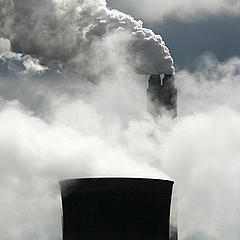
Climate change is probably the most significant challenge of the 21 Century. Caused by unsustainable patterns of production and consumption, it is the result of accumulation of greenhouse gases in the atmosphere for the last 150 years, mainly from the burning of fossil fuels.

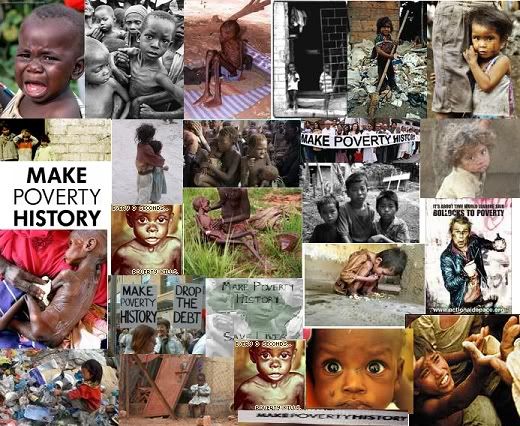
The environmental impacts of climate change – which we are already suffering – affect us all, but especially the poorest and most vulnerable. For developing countries, which have contributed very little to the problem, climate change will take a heavy toll on their efforts in pursuit of sustainable development.

The convention’s Kyoto Protocol set quantified emission limitation or reduction obligations for industrialized countries, based on the principle of countries’ common but differentiated responsibilities in relation to the problem’s cause.

The Convention itself recognizes that the share of global emissions originating in developing countries will grow to meet their social and economic needs. In many of these countries, emissions may grow as a result of policies devoted to fighting poverty, such as, for instance, expanding electricity to rural or remote areas. On the other hand, the situation in developed countries that have already provided for the basic needs of their populations is different: in many of them, a major source of emissions is due to superfluous and unsustainable consumption.

It must be stressed, however, that the Kyoto does not give for all emergent countries a license to pollute. Since climate change is a global problem, efforts to combat it should also be global. What changes in different countries is the nature of the obligations. The common objective, however, is a future in which development is based on low-carbon consumption.


Future Foods: Join the GM Debate


There are many issues surrounding the GM pro/con debate, this should give you a peek into what GM food is and why so many people seem to either be staunch advocates or violent opponents of it.
One issue that is hotly debated among scientists and the general public alike is genetically modified (GM) food. For those who are unsure what this is, GM food is considered to be any food product that has had its DNA modified in a lab. This may mean that genes were added by scientists, as in tomatoes which can withstand pesticide treatments that would typically kill them (a.k.a. round-up ready crops). Cotton is another crop that has been modified. It can now produce Bt toxin which kills certain bacterial pathogens. You may have heard of this specifically since there has been concern that the toxin is also killing butterflies that feed on the corn pollen. Modifications to a plant's DNA does not have to be so controversial or public, however. As of 2006, 89% of soybeans, 83% of cotton and 61% of corn in the U.S. was genetically modified in some way. Rice, tomatoes, squash and papaya have also been modified, although few people seem to realize it. Currently, only 18% of our land mass is cultivated for agriculture. To make matters worse, urban sprawl and development claim 70,000 km2 per year of previously dedicated farmland. Add to this, the global population is expected to reach 9 billion by 2040 and a serious problem arises. How do we propose to continue feeding ourselves in the future when our population is rising and our farmland is shrinking?

GM foods are resistant to more diseases, grow in less space, provide greater yield and need fewer pesticide applications. There are other benefits as well since they can be engineered to carry medicines. For example, bananas can now carry a vaccine for Hepatitis D. Simply doing something as simple as eating these bananas can save adults and children from becoming infected by a disease that is both horrible and incurable. Syngenta, a GM company, is now producing rice which contains 23 times more vitamin A than conventional rice. Since vitamin A deficiencies cause 500,000 deaths per year, the medicinal quality to such rice is significant. Foods such as these may be genetically modified, but they are positioned to affect the world’s population in positive and potentially life-saving ways.

Future Foods: Join the GM Debate

Watch video

Future Foods

This event is held at the Science Museum until the 31st of May 2009. The display explains the science behind genetically modified crops and explores the alternatives.
Location: Exhibition Road, London,
Contact: http://www.sciencemuseum.org.uk/
Organisers: Science Museum
Website: http://www.sciencemuseum.org.uk/


My favourite video: Discover Rio de Janeiro

YouTube

jumaddalena has shared a video with you on YouTube:

Discover Rio de Janeiro- Brazil.Narrated in English.
"Sea,Lagoon, Forest...
And all of that in the middle of a city"
Discover Rio de Janeiro - Brazil

Bye Bye pre-sessional english course..


Bye Bye group, bye bye Jim!
I wish all the best for this group. We have studied hard until the end of this course.
I had a good experience and improve my english a lot..
I really like to keep in touch with everyone,
Please, send emails, photos, and call me any time!
Thanks Jim for help us,
See you guys.. Bye Bye

I was on the news last night


I just have received this email for one friend.. and I'm really proud
=) Thank you guys!

Hi Juliana

I couldn't believe it when I spotted you on the news last night. Well done - it was a great story.

In case you didn't catch it you'll be pleased to know I recorded it. You can view it here:
http://www.themessagegroup.com.au/last-nights-news.php?title=20090125-Juliana-Maddalena_create.html

Congratulations again.

Grammar Review / Hedging in Academic Writing

‘Vague language and hedging’

To ‘hedge’:

· To use an intentionally noncommittal or ambiguous statement
· To use evasive or deliberately vague language
· To avoid fulfilling or answering a question completely
· To be confidently uncertain
· To use verbal and adverbial expressions such as can, perhaps, may, suggest, which deal with degrees of probability

In order to distinguish between facts and claims, writers often use tentative language such as it seems likely that... or arguably.... This technique is called hedging or vague language. Hedging is crucial in academic discourse, and hedge words account for approximately 1 word in every 100 in scientific articles.

Example: “Our results seem to suggest that in less industrialised countries the extensive use of land to grow exportation products tends to impoverish these countries' populations even more”.

It is often believed that academic writing, particularly scientific writing, is factual. However an important feature of academic writing is the concept of cautious language, or "hedging". It is necessary to make decisions about your stance on a particular subject, or the strength of the claims you are making. The appropriate use of hedging strategies for academic argumentation is a significant resource for student writers and plays an important part in demonstrating competence in a specialist register.

Four reasons to hedge

1- By hedging, authors tone down their statements in order to reduce the risk of opposition. This position associates hedges with scientific imprecision and defines them as linguistic cues of bias which avoid personal accountability for statements.

2- Writers want their readers to know that they do not claim to have the final word on the subject.
Expressing a lack of certainty does not necessarily show confusion or vagueness. One could consider hedges as ways of being more precise in reporting results. Hedging may present the true state of the writers' understanding and may be used to negotiate an accurate representation of the state of the knowledge under discussion. In fact, academic writers may well wish to reduce the strength of claims simply because stronger statements would not be justified by the data or evidence presented.

3- Hedges may be understood as positive or negative politeness strategies in which the writer tries to appear humble rather than arrogant or all-knowing. Hedging is a rational interpersonal strategy which supports the writer's position, builds writer-reader (speaker/listener) relationships and guarantees a certain level of acceptability in a community. Once a claim becomes widely accepted, it is then possible to present it without a hedge.

4- A certain degree of hedging has become conventionalized; hedging now functions to conform to an established writing style in English.


Modal auxiliary verbs: may, might, can, could, would, should

‘Such a measure might be more sensitive to changes in health after specialist treatment.’

Modal lexical verbs doubting and evaluating rather than merely describing
to seem, to appear (epistemic verbs), to believe, to assume, to suggest, to estimate, to tend, to think, to argue, to indicate, to propose, to speculate

In spite of its limitations, the study appears to have a number of important strengths.’
Probability adjectives: possible, probable, un/likely

‘It is likely to result in failure.’
Nouns
assumption, claim, possibility, estimate, suggestion
We estimate that one in five marriages end in divorce.’
Adverbs
perhaps, possibly, probably, practically, likely, presumably, virtually, apparently

‘There is, perhaps, a good reason why she chose to write in the first person.’

Approximators of degree, quantity, frequency and time
approximately, roughly, about, often, occasionally, generally, usually, somewhat, somehow, a lot of

Fever is present in about a third of cases.’
Introductory phrases
believe, to our knowledge, it is our view that, we feel that
‘We believe that there is no simple explanation.’

“If” clauses: if true, if anything

‘If true, our study contradicts the myth that men make better managers than women.’

Compound hedges: seems reasonable, looks probable

Such compound hedges can be double hedges (it may suggest that; it seems likely that; it would indicate that; this probably indicates); treble hedges (it seems reasonable to assume that); quadruple hedges (it would seem somewhat unlikely that, it may appear somewhat speculative that) and so on.

Ecology of food and nutrition : an international journal

Library and resources for food industry

Metranet and Library Services are very usefull. I have read a good article from the journal Ecology of Food and Nutrition, which I found at Library Catalogues from LondonMet, it is about Globalisation and Cow's Milk production and consumption: Biocultural perspectives

Author: Wiley, Andrea S.1 Source: Ecology of Food and Nutrition, Volume 46, Numbers 3-4, May 2007 , pp. 281-312(32) Publisher: Routledge, part of the Taylor & Francis Group


**If you want to read any article related with your subject area, link to:
http://www.londonmet.ac.uk/services/sas/library-services/subject-help/subjects/foodsci/journals.cfm

**My notes about this article:

Milk is increasingly becoming a globalized food, consumed by populations that have not traditionally included it in the diet. It is being widely promoted, especially for children, and is included in most food-based dietary guidelines. Justifications for increasing cow’s milk consumption usually focus on its “healthiness” and its ability to enhance the growth of children. It appears that populations are receptive to such messages about milk, and along with perceptions of milk as a “modern” or “western” food, these contribute to increasing milk consumption.

The globalization of milk also must be understood as a function of declining consumption in countries that have traditionally consumed large quantities of milk. This has caused dairy industries to search for new markets abroad, and they are especially interested in marketing in Asian countries where incomes are rising and populations are large or growing. But what is curious about this process is that while milk is broadly considered a “traditional” food in European and European-derived societies, it is seen as “modern,” “scientific,” or “cool” in countries such as China. It is hard to imagine American teenagers or adults drinking milk because it is a “cool” drink, or drinking it on festive occasions.

One of the most important and odd aspects of this process is the fact that many Asian populations, among whom growth in dairy consumption is greatest, also have high rates of lactase resistance. Large numbers of individuals are therefore vulnerable to the symptoms of lactose intolerance when they consume milk. Given this, it seems strange that fluid milk should be widely perceived as a particularly healthy food. It is salient that the greatest success that dairy producers may have in Asian countries will be with yoghurt, or other fermented milk beverages.

Fermentation results in diminished lactose concentrations and thereby circumvents potential problems with lactose intolerance. As Japan’s experience demonstrates, milk consumption may level out at relatively low per capita amounts, but the market for yoghurt-based drinks may have more potential for growth in populations with high rates of lactase resistance.

Yoghurt’s growth potential may also be facilitated by familiarity with other fermented white drinks (i.e., soy milk) among Asian populations. Although milk is similar to other foods such as corn or cassava that can generate health problems (pellagra [niacin deficiency] or cyanide poisoning, respectively) without proper processing techniques (and which had rather checkered histories of acceptance), milk’s rapid ascendancy may be due to a universal familiarity with milk consumption by infants, and milk’s intrinsic health- and growth-promoting characteristics. That populations of economically powerful and culturally dominant countries have long traditions of milk consumption, and these attributes can be correlated with larger body sizes (especially height), further contributes to positive evaluations of milk among populations with no tradition of milk drinking.

How these ideas articulate with experiences of lactose intolerance as more people have more experience with milk will be an important topic for investigation. And of course, whether increased milk drinking will have the widely anticipated (but scientifically unfounded) positive effects on height also remains to be seen.

Attend a live lecture / talk or seminar in London


Hello, friends
January almost finish, this month was really good for me, 18 days ran, I have learned, wrote and talk about globalisation and issues about sustainability, environment, agriculture, and poverty.. I have read several books about this topic, actually 4 and those books helped me. Also, I've listened two lectuares and good videos about poverty and food production.. yeah! I made a hard work, and probably I will continue for my master course.. I would like to suggest for all students to attend a live lecture in London. It will help develop our listening skills for understanding lectures and talks. One of the places to attend is at UCL, and I will try to attend in special: 27 January: President Obama and America in the world: from inauguration to action, 26 February: Children and the environment - independence or obesity?, 5 March: The future of Brazil

After those events I 'll post a brief notes and write a summary of the main points afterwards.

LUNCH HOUR LECTURES

http://www.ucl.ac.uk/lhl/

UCL Lunch Hour Lecture Series
  • Feed your mind at lunchtime
  • Free and open to everyone, with places allocated on a first-come, first-served basis
  • Watch the lectures online (each lecture is available to watch online from 7 days after the event)

Time and location: 1.15–1.55pm, Darwin Lecture Theatre, UCL, Gower Street, London WC1E 6BT. Please click here for a map to the Darwin Lecture Theatre. Please note the entrance to the Darwin Building is via Malet Place.

Admission: Free and open to everyone with no need to book. Please arrive early as places are limited. Admittance is on a first-come first-served basis.

Watch online: If you are unable to attend, all Lunch Hour Lectures will be available to watch online from 7 days after the event

My Essay Conclusion / Sustainable World

This is a sum up of each part of my conclusion [in brackets]


Overall globalisation favour only small economic elite, leaving behind the economically weak and fostering a negative impact income distribution. Also, agriculture and food system are symbols of economic imperialism.

[This sentence provide a link to the previous paragraph and refers to the main subject that was discussed in the body in the essay]


There are explicit problems with the economic conditions for local communities, especially when applied at the global level. As well, the processes of trade liberalisation-globalisation are not uniform and in fact there is a disproportion between the rich and poor countries for agricultural industries, sustainability and environment as well as income and poverty.

[These sentences refer back to the particular problem areasforeshadowes in the introduction and identufy solutions.]


Despite the fact that the planet has some considerable extra capacity in food production, the problem is that many citizens in poor countries just can’t afford the prices.

[This sentence refers back to the thesis statement in the introduction and identifies a key finding of the study]


Above all, in other to minimise environment problems and to maintain our wildlife, rich countries could spend money directly on helping poor rural areas, just as it should be on declining industrial regions. Also, people are willing to pay a large premium for organic produce; and some farmers will be able to make a living more sustainable.

[The final sentence suggests future trends and makes a final recommendation for further study]

FIRST DRAFT _ Checklist


  • YES! there is a brief overview relating to globalisation

  • YES! you would be able to guess by reading the introduction

  • YES! It's relation to my own subject area and narrow down the focus of the essay.

  • YES! there's a Thesis Statement

  • Well about the correct length.. it's around 200, so maybe I have to change this..

My Global Ideas.. and Sustainable Food System


We live in a luxury world for ones but we also live in a world with poverty, famines and overpopulation. What's this global phenomenon represent for our real life, in special for food production? Integration of world economy? So one of the factors to grown the economy in the world is when food system has burgeoned in face of globalisation. Moreover, the chemical products like fertilizes and pesticides were used for modern agriculture solving the problem of overpopulation. However, terrible disasters for our environment and unsustainable agriculture reflect this time our real world.

Globalisation lecture

Globalisation
Credit crunch, first time after great depression
Banks are lending money 5times more than people's income.
Since the house prices are decreased, people have to sell their houses to the lower prices than they used to.

*Lecture notes:
sub-prime mortgages => credit/$ <= Bank => CDOs/$ <= asset-backed securities sold globally -Mortgages defaults increase -Flow of money stops -Banks concerns over asset-backed securities interbank lending stops *Global effect : usa (CDOs) => uk(CDOs) => europe (CDOs) => china(CDOs) =>india (CDOs)financial markets are global effects
If something happens in one country it will be spread to entirely different country because of the global markets.

Liquidity crises => not enough money for us and also for businesses and because of the liquidity crises everyone started to suffer. businesses go to bankruptcy , they cannot expand, people lose their jobs, living costs are getting higher etc.banks in turmoilin UK, northern rock and in USA, bear stearns are collapsedstock market roller coaster ( failing month by month)

Philosophy of globalisation-liberalization : whatever you do is OK as long as you re making money liberalization: trade, finance, production-all the laws specified for globalization, trade agreements etc. everything is free up the movement of goods and services they removed the rules and regulations but it had side effects of course like air pollution , cheap labour.

Free trade becomes rid of restrictions and brings no obligationsnot for everyone though, somebody had to payonly big multinational companies like coca cola , Gap , Zara can use the advantages

How to organize cause and effect essays

Cause and Effect Essay

Today, in the first part of the class, Helen (my excellent teacher) explained us about the diferences of CAUSE x EFFECT and how we should use this in a student essay..


Definition:

  • In this kind of essay, the aim is to explain the causes (reasons) or the effects (results) of an event or situation.
e.g. Causes of air pollution (multiple factors leading to air pollution).
e.g. Effects of watching too much TV (many effects of a situation).
  • Sometimes an event causes something to happen, and that situation leads to another event, and it causes another event to happen. This is called the causal chain or domino effect.
e.g. Use of deodorants will bring the end of the world.
  • There may be several causes or effects of a situation. However, in a student essay, it is advisable to keep the number of major points to 2 or 3, which form separate developmental paragraphs.

Organization:
Depending on the topic, there may be three patterns of organization:

1. Multiple causes-->effect
In this pattern, the organization is as follows:
  • Thesis statement: Air pollution is caused by the following factors: exhaust gases from cars, uncontrolled factory releases, and burning of low-quality coal for heating.
I. exhaust gases from cars A. government does not have enough control B. citizens are not conscientious
II. uncontrolled factory gases A. no regular checks on gases released B. factories are inside the borders of residential areas
III. burning of low-quality coal for heating A. no governmental control B. other forms of energy too expensive Each developmental paragraph is devoted to one of the causes of air pollution. Each cause is supported by two minor supports. While writing, these major and minor ideas should be adequately explained and exemplified as well.

2. Cause-->Multiple effects In this pattern, the effects of a certain situation are explained in separate paragraphs, with the following organization:
  • Thesis statement: Watching too much TV is one of the major sociological issues of this century, which has many effects on the physiology and psychology of people.
I. eating disorders
A. TV meals
B. obesity

II.
communication problems
A. more violence

B. no interpersonal talk

  • Again, we have grouped related effects under two main points: physiological and psychological. Then, we have supported each effect with two minor supports (A and B). While writing, we should explain these major and minor supports by giving examples and/or defining what we mean, as well.
3. Causal chain / Domino
In this pattern, the events lead to one another, as in the following organization:

  • Thesis statement: Using deodorants with chlorofluorocarbon gas will bring th end of world.
I. Chlorofluorocarbon gases are contained in most deodorants and released by some factories into the air.
II. This gas causes the ozone layer to become thinner and finally disappear in patches.
III. The unfiltered ultraviolet rays of the sun cause overheating in the poles of the earth, where the icebergs start to melt. IV. The huge amount of water released from the poles leads to a rise in the sea-level.
V. The sea will cover the land and this will be the end of the world.

  • Again, each major point should be supported with examples, statistics that show that there are some factories and deodorants that release chlorofluorocarbons, that there is a rise in the sea-level, etc.
Language:
  • To explain reasons and results, we use:
  • As a result,
  • As a consequence,
  • Consequently,
  • So,
  • Since
  • As,
  • Because
  • One reason why ...
  • One of the most important reasons why ...
  • The main reasons why ...
  • There are other reasons, too, ...
Do not forget that using transitions enables the piece of writing to be coherent; it is easier for the reader to follow our ideas when transitions are used to link them together. However, overuse of transitions causes a traffic jam and should be avoided. We should be using transitions sparingly (only when necessary).

Essay checklist: 10 things to consider

Hello, I found this website very interesting from Jim's favourite list websites..
“Essay Check list”
http://www.essex.ac.uk/myskills/skills/default.asp

One
Have you understood and responded to the question?

Two
Does your introduction state your response and outline how you will present it: your strategy, argument, evidence?

Three
Have you discussed and properly referenced the most important literature? Have you assessed, critiqued, compared and/or contrasted this literature?

Four
Have you discussed the strongest, most significant arguments/theories relevant to your topic?

Five
Have you set out your argument and supporting evidence in a logical, persuasive sequence? Does your essay have a structure?

Six
Have you linked it all up and signposted to tell the reader what you are doing at every step and how it relates to the overall argument?

Seven
Have you connected the empirical evidence and specific arguments to a broader theoretical or conceptual framework?

Eight
Have you considered the underlying principles of your argument?

Nine
Have you shown any independent judgement, imaginative response, reflection?

Ten
Have you recapped your argument in the conclusion? Restated your answer to the question? Suggested the implications?

Authored by: Dr Theresa Crowley, Department of Government


Am I ready to study in English?

Self-assessment exercises: reading and understanding
The homework that Jim passed in his class last monday.. and I didn't forget.. see my result:

Task 3: Science: Keeping our water clean
1- A (correct)
2-A (correct)
3-B (correct)
4-A (incorrect)
5-A (correct)
6-B (correct)

Self-assessment
It was not a problem at all. I understood the tasks and got most of them right.

Happy 2009!

Hello, happy new year!
2009 already start and my course too.. so, it's time to write a little bit!

This month 3 my written assignment and presentation are about Globalisation.. what on earth is it about?

- global communication
- global revolution
- global migration
- global econony

...??? Globalisation is a reality that for better or worse, touches our lives in ways most us never stop to think about..

No one doubts that some very significant global processes—economic, social, cultural, political and environmental—are underway and that they affect (nearly)everyone and (nearly) everything. Yet, there is no agreement onexactly how to define this thing we call “globalization,” nor onexactly which parts of it are good or bad, and for whom.
- Globalization defines our era.
- While it has created a great deal of debate in economic, policy, and grassroots circles, many aspects of the phenomenon remain virtual terra incognita.
- How globalization and large-scale immigration are affecting food and environment? Taking into consideration broad historical, cultural, technological, and demographic changes, who benefits and who does not with these global transformations; how the benefits and the costs of these processes can be shared fairly; how the opportunities can be maximized by all; and how the risks can be minimized.
I will continue with my 'brainstorm' until start my first draft.. =) have a good night!